You've planned the perfect trip — flights booked, hotel reserved, itinerary set. But there's one travel companion you didn't invite: digestive misery. Bloating at 35,000 feet. Constipation that starts on day two. That vague nausea from eating unfamiliar foods. For millions of travelers, digestive disruption is an unwelcome but predictable part of every trip.
It's not your imagination, and it's not weakness. Travel fundamentally disrupts your digestive system through multiple mechanisms, and understanding why is the first step toward packing a travel digestive supplement that actually helps.
Why Travel Wrecks Your Digestion
Your gut is surprisingly sensitive to environmental changes. Here's what happens when you travel:
Circadian Rhythm Disruption
Your digestive system runs on a circadian clock — separate from but connected to your sleep-wake cycle. Crossing time zones throws off the timing of digestive enzyme secretion, gut motility, and even your microbiome's activity patterns. Research in Cell has shown that jet lag alters the composition of gut bacteria within just a few days.
Dehydration and Cabin Pressure
Airplane cabins maintain humidity levels around 10-20% — drier than most deserts. This draws moisture from your body, including your intestinal tract. Dehydrated intestines move contents more slowly, contributing to constipation. Meanwhile, the lower cabin pressure causes gas in your intestines to expand by up to 30%, leading to bloating and discomfort at altitude.
Dietary Changes
New cuisines, different cooking oils, unfamiliar spices, varying food hygiene standards, and irregular meal timing all challenge your digestive system simultaneously. Your gut bacteria are adapted to your regular diet — sudden changes can create temporary dysbiosis (microbial imbalance).
Stress and Anxiety
The gut-brain axis means that travel-related stress directly impacts digestion. Flight anxiety, schedule pressure, and the general hypervigilance of being in unfamiliar environments can slow gastric emptying and alter intestinal motility.
Reduced Physical Activity
Long flights, car rides, and sedentary transit days reduce the physical movement that normally helps propel food through your digestive tract. Peristalsis — the wave-like muscle contractions that move food — is supported by regular physical activity.
Key Ingredients in an Effective Travel Digestive Supplement
Ginger (Zingiber officinale)
Ginger is perhaps the most well-validated natural digestive aid, with a research history spanning decades. It works through multiple mechanisms: promoting gastric motility (helping your stomach empty faster), supporting healthy inflammatory response in the gut lining, and helping ease nausea.
A 2008 clinical trial found that 1,200mg of ginger accelerated gastric emptying and stimulated antral contractions in healthy volunteers. Research also confirms ginger's effectiveness for nausea through its action as a 5-HT3 receptor antagonist — the same mechanism used by prescription anti-nausea medications. Effective doses in clinical studies typically range from 250mg to 1,000mg.
Digestive Enzymes (Bromelain)
Bromelain, derived from pineapple stems, is a proteolytic enzyme that helps break down proteins — one of the hardest macronutrients for your body to digest. When you're eating unfamiliar foods or larger-than-normal meals (as often happens while traveling), supplemental enzymes can help support comfortable digestion.
A comprehensive review documents bromelain's ability to support protein digestion and help maintain comfortable levels of bloating and gas. A 2023 clinical trial found digestive enzyme supplementation significantly improved functional dyspepsia symptoms.
Artichoke Extract (Cynara scolymus)
Artichoke leaf extract stimulates bile production, which is essential for fat digestion. Rich travel meals — think creamy pastas, fried street food, and indulgent dinners — are often higher in fat than your usual diet. Artichoke extract may help your body process these richer meals more comfortably.
A controlled clinical trial found that artichoke extract significantly increased bile secretion at 120-150 minutes post-administration, supporting enzymatic digestion and intestinal motor function.
Probiotics and Prebiotic Support
Your gut microbiome is central to healthy digestion, and travel is one of the fastest ways to disrupt it. Probiotics — beneficial bacteria — can help support microbial balance during the disruption of travel.
A 2020 meta-analysis of 35 RCTs found that multi-strain probiotics significantly improved bloating scores in IBS patients. For travel specifically, look for shelf-stable probiotic strains that don't require refrigeration. Bacillus strains and certain Lactobacillus strains are more resilient to temperature variation.
Aloe Vera
Aloe vera has been used for centuries to support digestive comfort. It contains compounds called acemannan and aloin that may help support the gut lining and promote healthy digestive motility. A systematic review and meta-analysis found aloe vera effective and safe for short-term treatment of IBS symptoms. Research also shows processed aloe vera gel improves intestinal tight junction function.
Dandelion Root (Taraxacum officinale)
Dandelion root acts as a gentle prebiotic (feeding beneficial gut bacteria) and supports healthy bile flow. A 2022 review documents dandelion's potential for gastrointestinal support through its anti-inflammatory compounds and high inulin content (~40% of dry weight).
Lemon Balm (Melissa officinalis)
Lemon balm does double duty — it supports both digestive comfort and calm. Ex vivo research confirms it relaxes smooth muscle in the digestive tract (helping with cramping and spasms) while also supporting the nervous system. This makes it particularly valuable for travel, where stress and digestive issues often overlap.
Licorice Root (DGL)
Deglycyrrhizinated licorice (DGL) supports the mucous lining of the stomach and upper digestive tract. For travelers exposed to spicy, acidic, or unfamiliar foods, this protective support can help maintain digestive comfort.
Why Travel Supplements Need to Be Portable
The best travel digestive supplement is one you actually bring with you. Large bottles with dozens of capsules are impractical — they take up luggage space, may raise questions at customs, and are easy to forget at home.
This is where single-serve sachets change the game for travel supplementation:
- TSA-friendly: Individual packets don't trigger the same scrutiny as loose capsules in bottles.
- Lightweight: Pack exactly the number of servings you need for your trip length.
- No refrigeration: Shelf-stable formulas survive in checked luggage, backpacks, and warm climates.
- Precise dosing: Each packet contains exactly what you need — no counting capsules at a restaurant table.
- Discreet: Take one before a meal without pulling out a bottle of pills.
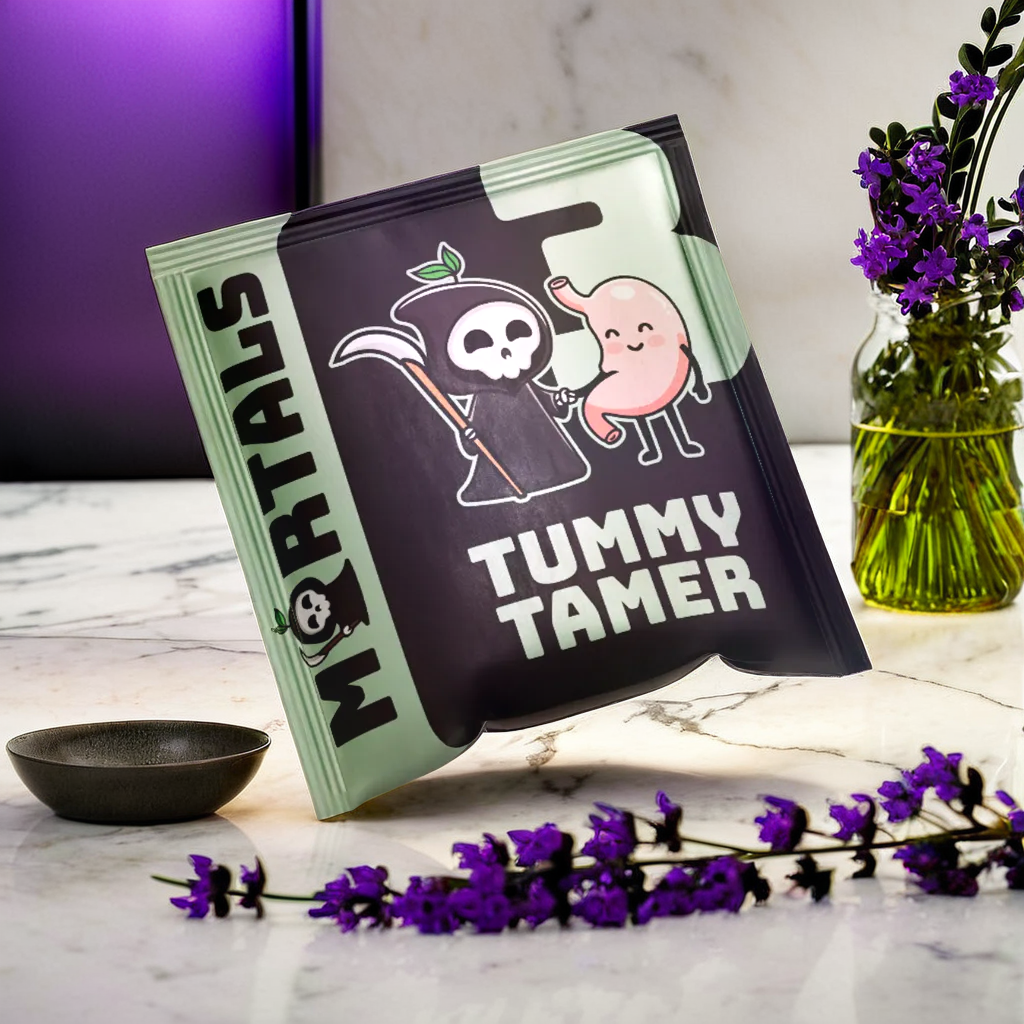
Tummy Tamer by Mortals was designed with exactly this use case in mind. Each single-serve sachet contains clinically-dosed ginger, artichoke extract, dandelion root, bromelain, aloe vera, lemon balm, licorice root, and probiotics — just 2 capsules that work within 15-30 minutes. Toss a few sachets in your carry-on and you're covered for the entire trip.
Your Travel Gut Health Packing Checklist
Beyond supplements, here's a comprehensive approach to protecting your digestion while traveling:
Before Your Trip
- Start a probiotic 3-5 days before departure to build gut resilience
- Pack enough single-serve digestive supplement sachets for each day plus extras
- Research food safety practices at your destination
- Fill a reusable water bottle to bring through security (empty) and fill on the other side
During Transit
- Hydrate aggressively — aim for 8oz of water per hour of flight time
- Avoid carbonated beverages (gas expansion at altitude)
- Move every 1-2 hours on long flights to support gut motility
- Eat lighter meals on travel days — your digestion is already compromised
- Take a digestive supplement before airport meals
At Your Destination
- Maintain hydration, especially in warm climates
- Introduce local cuisine gradually rather than diving into the most adventurous options on day one
- Take a digestive supplement before unfamiliar or rich meals
- Walk after meals — even 10 minutes helps gastric motility
- Try to eat at roughly the same times as your destination's local schedule to help reset your gut clock
Special Considerations by Destination Type
Beach/Resort Vacations
Rich buffet meals, poolside cocktails, and heat create a perfect storm for digestive disruption. Bring extra digestive support and prioritize hydration — alcohol and heat both dehydrate the gut.
Adventure/Backpacking Trips
Street food, variable hygiene standards, and limited access to clean water make digestive supplements particularly valuable. Single-serve packets are ideal for backpackers — minimal weight, maximum protection.
Business Travel
Client dinners, unfamiliar restaurants, and time zone changes are standard business travel challenges. Discreet supplement sachets that fit in a suit pocket let you support your digestion without drawing attention.
Long-Haul International Flights
Flights over 6 hours compound every digestive challenge: dehydration, immobility, gas expansion, circadian disruption, and poor airline food. Take a digestive supplement before eating on the plane and prioritize hydration over alcohol.
Frequently Asked Questions
What is the best digestive supplement for travel?
Look for a multi-ingredient formula with ginger, digestive enzymes (like bromelain), probiotics, and gut-soothing botanicals. Single-serve formats are most practical for travel. Tummy Tamer combines all of these in a portable sachet.
Should I take probiotics before traveling?
Starting probiotics 3-5 days before travel may help build gut resilience. Continue through your trip and for several days after returning to support microbiome recovery.
How do I prevent bloating on a flight?
Avoid carbonated drinks, stay hydrated, eat smaller meals before and during the flight, move regularly, and consider a digestive supplement with ginger and bromelain before eating.
Are travel digestive supplements TSA-friendly?
Yes, supplement capsules and packets are permitted through TSA security. Single-serve sachets are particularly convenient as they're clearly pre-packaged and easy to identify.
When should I take a digestive supplement while traveling?
For best results, take a digestive supplement 15-30 minutes before meals, particularly before unfamiliar or rich foods. You can also take one at the onset of digestive discomfort.
Written by Connor. Connor is the founder of Mortals, an all-natural supplement brand focused on clinical dosing. After years of frustration with underdosed supplements and misleading labels, he created Mortals to deliver what the research actually supports.
*These statements have not been evaluated by the Food and Drug Administration. This product is not intended to diagnose, treat, cure, or prevent any disease. Always consult your healthcare provider before starting any new supplement regimen.