Written by Connor. Connor is the founder of Mortals, an all-natural supplement brand focused on clinical dosing. After years of frustration with underdosed supplements and misleading labels, he created Mortals to deliver what the research actually supports.
Hidden inside the rough, spiky exterior of a pineapple is one of nature's most versatile enzymes: bromelain. While most people think of pineapple as a tropical fruit, the enzyme complex extracted from its stem has been the subject of serious scientific research for decades — with applications ranging from inflammatory response support to digestive health.
In this guide, we cover the bromelain benefits backed by research, how it works, proper dosing, and why it deserves a place in your natural wellness routine.
What Is Bromelain?
Bromelain is not a single compound but a complex of proteolytic enzymes (enzymes that break down proteins) extracted primarily from the stem of the pineapple plant (Ananas comosus). While the fruit itself contains some bromelain, the stem has significantly higher concentrations, which is why commercial bromelain supplements use stem extracts.
The enzyme complex includes several thiol endopeptidases and other components including phosphatases, glucosidases, peroxidases, and protease inhibitors. This multi-component nature is part of what gives bromelain its diverse range of biological activities.
Bromelain has been used therapeutically since at least the 1950s, when researchers first began documenting its effects beyond simple protein digestion. Today, it's approved as a therapeutic agent in many European countries and has been the subject of over 1,600 published research papers.
How Bromelain Works: Mechanisms of Action
1. Proteolytic Activity
At its core, bromelain is a protease — it breaks down proteins. This is the basis for its digestive benefits. When taken with food, bromelain assists in breaking down dietary proteins into amino acids and peptides, supporting nutrient absorption and reducing the digestive burden on the pancreas.
2. Inflammatory Mediator Modulation
When taken on an empty stomach, bromelain is absorbed intact into the bloodstream, where it can exert systemic effects. Research published in Biomedical Reports (PubMed) demonstrated that bromelain modulates several key inflammatory mediators:
- Reduces production of pro-inflammatory prostaglandins (particularly PGE-2) (PubMed)
- Modulates thromboxane A2 levels
- Reduces bradykinin at the site of tissue stress
- Influences cytokine production (IL-1beta, IL-6, TNF-alpha)
3. Fibrinolytic Activity
Bromelain has demonstrated fibrinolytic properties — the ability to break down fibrin, a protein involved in blood clotting and tissue swelling. This mechanism contributes to its ability to support comfortable recovery from physical stress. Research in Cellular and Molecular Life Sciences showed that bromelain activates plasminogen to plasmin, enhancing the body's natural fibrinolytic process.
4. Immune System Modulation
Bromelain appears to modulate immune cell activity, including T-cell and macrophage function. A study in International Immunopharmacology found that bromelain influenced the expression of surface molecules on immune cells, suggesting a role in immune regulation rather than simple suppression.
Clinical Research: Bromelain for Inflammatory Response
Joint and Musculoskeletal Comfort
A 2004 systematic review published in Evidence-Based Complementary and Alternative Medicine (PubMed) analyzed multiple clinical trials and concluded that bromelain showed consistent support for joint comfort. Studies used doses ranging from 200mg to 2,000mg daily.
A notable 2006 study in QJM: An International Journal of Medicine (PubMed) tested bromelain in 47 patients with knee discomfort in a randomized, double-blind, placebo-controlled design. Over 4 weeks, participants taking bromelain reported significant improvements in comfort and physical function scores compared to placebo.
Post-Exercise Recovery
Athletes have used bromelain for decades to support recovery. Research on proteolytic enzymes (including bromelain) in exercise recovery found that supplementation was associated with faster return to comfort and function after intense physical activity (PubMed).
Surgical Recovery Support
Multiple studies have examined bromelain for post-surgical comfort. A systematic review and meta-analysis in the Journal of Oral and Maxillofacial Surgery (PubMed) found that bromelain supplementation after dental surgery was associated with reduced swelling and improved comfort scores compared to placebo.
Clinical Research: Bromelain for Digestion
Protein Digestion
A 2012 study in Biotechnology Research International demonstrated that bromelain effectively hydrolyzes a wide range of dietary proteins, including casein, collagen, and soy protein. The enzyme works across a broad pH range (3.0-8.0), meaning it can function in both the acidic stomach environment and the more alkaline small intestine.
Digestive Comfort
Research published in Clinical Immunology found that bromelain modulated inflammatory markers in intestinal tissue, suggesting it may support gut comfort beyond simple protein digestion. Participants supplementing with bromelain reported improved digestive comfort scores.
Bromelain Dosing: What Research Supports
Bromelain dosing is measured in GDU (gelatin digesting units) or MCU (milk clotting units), which reflect enzymatic activity rather than simple weight. Typical clinical doses:
- Digestive support (taken with meals): 200-500mg with food
- Inflammatory response support (taken on empty stomach): 200-2,000mg between meals
- Post-exercise recovery: 200-1,000mg before and after activity
- In combination formulas: 100-500mg as part of a multi-ingredient supplement
The timing of bromelain intake matters significantly. When taken with food, bromelain acts as a digestive enzyme. When taken between meals on an empty stomach, it's absorbed systemically and exerts its inflammatory-response-supporting effects.
Bromelain in Mortals Products
Mortals includes bromelain in two products because of its dual functionality:
Pain Purge features bromelain alongside turmeric (with BioPerine), boswellia, white willow bark, ginger, and magnesium. In this formula, bromelain's inflammatory-modulating and fibrinolytic properties complement the other ingredients' mechanisms for comprehensive support.
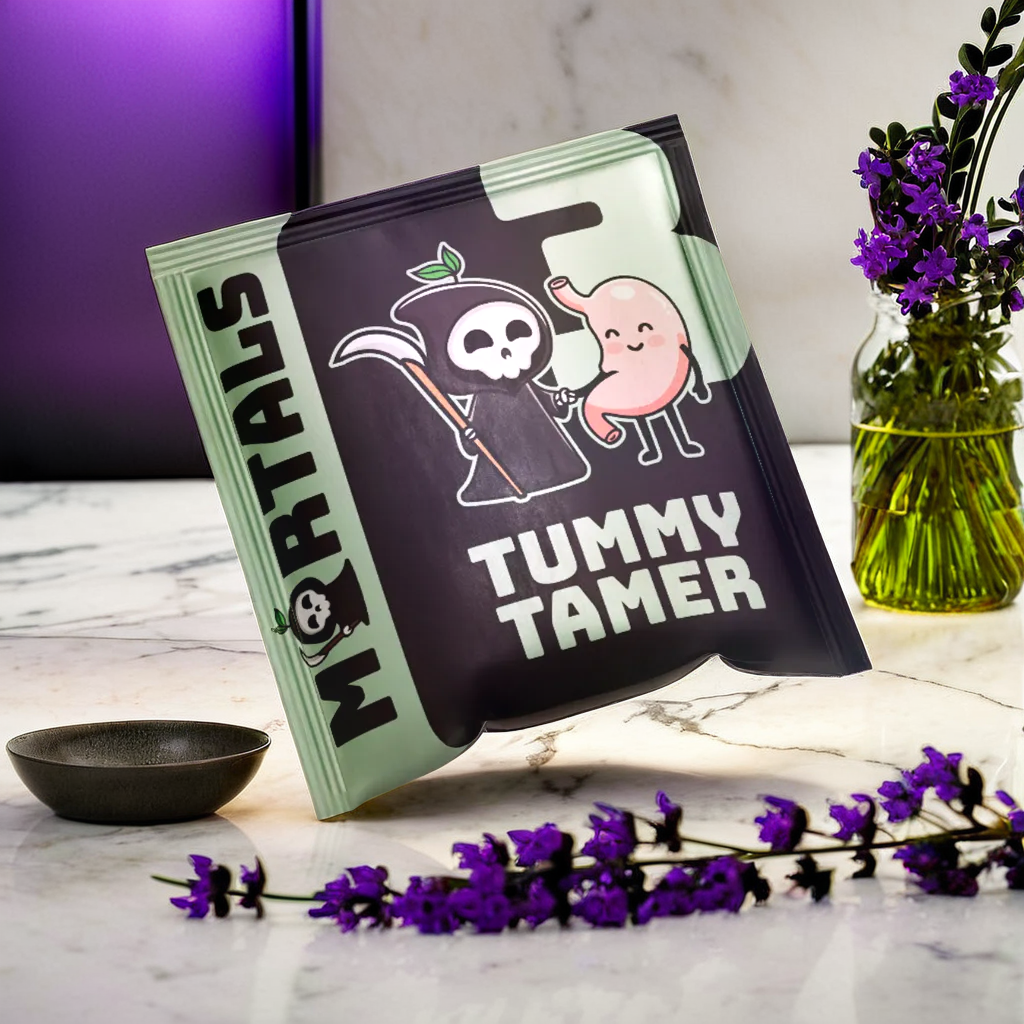
Tummy Tamer includes bromelain for its digestive enzyme activity, working alongside ginger, artichoke extract, dandelion, aloe vera, lemon balm, licorice root, and probiotics to support complete digestive comfort.
Both formulas come in single-serve sachets, are triple third-party tested, and are manufactured in cGMP, FDA-registered facilities in the USA. It's also vegan, non-GMO, and gluten-free.
What Makes a Quality Bromelain Supplement
Enzymatic Activity Over Weight
A bromelain supplement listing "500mg" means little without knowing its enzymatic activity (GDU per gram). Higher GDU means more active enzyme per milligram. Quality supplements list both the weight and the enzymatic activity.
Source Matters
Stem-derived bromelain has higher enzymatic activity than fruit-derived. Look for products specifying pineapple stem extract.
Enteric Coating for Systemic Benefits
If you're taking bromelain for inflammatory response support (rather than digestion), enteric-coated capsules help protect the enzyme from stomach acid degradation, improving systemic absorption.
Third-Party Testing
Enzymatic supplements require careful quality control. Third-party testing verifies that the listed enzymatic activity matches what's actually in the capsule.
Safety and Considerations
- Generally well-tolerated: Bromelain has an excellent safety profile at recommended doses. Mild GI discomfort may occur at very high doses.
- Pineapple allergy: Individuals with known pineapple allergy should avoid bromelain supplements.
- Blood-thinning medications: Bromelain's fibrinolytic activity means it may enhance the effects of anticoagulant medications. Consult your healthcare provider.
- Antibiotics: Some research suggests bromelain may increase absorption of certain antibiotics, particularly amoxicillin. Discuss with your healthcare provider if relevant.
- Surgery: Discontinue bromelain at least 2 weeks before scheduled surgery due to potential effects on blood clotting.
Frequently Asked Questions
What is bromelain good for?
Bromelain supports both digestive health and the body's inflammatory response. When taken with food, it helps break down dietary proteins. When taken on an empty stomach, it may support joint comfort, exercise recovery, and the body's natural inflammatory response.
How much bromelain should I take?
Clinical studies typically use 200-2,000mg daily, depending on the purpose. For digestive support, 200-500mg with meals is common. For inflammatory response support, 500-2,000mg between meals on an empty stomach is typical in research.
Is bromelain the same as eating pineapple?
No. You would need to eat enormous amounts of pineapple — particularly the stem, which is not typically consumed — to match the bromelain content in a quality supplement. Supplements use concentrated stem extracts with standardized enzymatic activity.
Can I take bromelain every day?
Yes. Clinical studies lasting 4-12 weeks showed no significant adverse effects with daily bromelain supplementation. It does not appear to cause tolerance and is considered safe for ongoing use at recommended doses.
When should I take bromelain — with food or without?
It depends on your goal. For digestive support, take bromelain with meals. For inflammatory response support and systemic benefits, take it between meals on an empty stomach so it's absorbed into the bloodstream rather than used for food digestion.
About the Author
The Mortals Team creates all-natural supplements with clinical-dose ingredients, manufactured in FDA-registered, cGMP facilities in the USA. Every Mortals product is triple third-party tested, vegan, non-GMO, and gluten-free. Learn more at trymortals.com.
*These statements have not been evaluated by the Food and Drug Administration. This product is not intended to diagnose, treat, cure, or prevent any disease. Always consult your healthcare provider before starting any new supplement regimen.