The probiotic market has exploded into a $70 billion global industry, and it seems like every health influencer and grocery store shelf is pushing probiotics as the answer to everything from digestive issues to mental health. But here is the reality: the science on probiotics is more nuanced than most people realize.
Some experts call probiotics a revolution in gut health. Others point out that strong evidence exists for only a handful of specific conditions. The truth, as usual, lies somewhere in the middle — and understanding where probiotics actually help versus where they are overhyped can save you money and help you make better decisions for your health.
The Probiotic Boom — And the Backlash
Probiotics are live microorganisms that, when consumed in adequate amounts, confer health benefits on the host. That is the official definition from the World Health Organization, and it is important because not every product containing bacteria qualifies as a true probiotic.
The American Gastroenterological Association (AGA) has taken a cautious stance, recommending specific probiotic strains for specific conditions only — not as a general wellness supplement for everyone. Meanwhile, Scientific American has reported that strong evidence exists for only "a few relatively rare diseases."
Does that mean probiotics are useless? Not at all. It means that strain specificity matters enormously. Taking a random probiotic off the shelf is like taking a random antibiotic and hoping it works for your specific infection. The strain, the dose, and the condition you are targeting all matter.
Where the Evidence Is Strongest
Antibiotic-Associated Diarrhea
This is where probiotic evidence is most robust for the general population. Multiple meta-analyses confirm that specific strains — particularly Saccharomyces boulardii and Lactobacillus rhamnosus GG — significantly reduce the risk of diarrhea during and after antibiotic courses. The mechanism makes intuitive sense: antibiotics wipe out both harmful and beneficial bacteria, and probiotics help repopulate the beneficial ones.
IBS Symptom Management
Irritable bowel syndrome affects up to 15% of the global population, and certain probiotic strains show meaningful benefits for specific IBS symptoms. A 2020 meta-analysis of 35 RCTs involving 3,452 patients found that probiotics significantly improved IBS symptoms including bloating (SMD -0.15, P = 0.01). Multi-strain formulas tend to outperform single-strain products for IBS, likely because the condition involves multiple disruptions to normal gut function. However, response varies significantly between individuals — what works for one person may not work for another.
Immune Function Support
Approximately 70% of your immune system resides in your gut. Research shows that certain probiotic strains can modulate immune responses, potentially reducing the duration and severity of common respiratory infections. A 2020 meta-analysis found that probiotics reduced the incidence of upper respiratory tract infections in adults and children, though the effect sizes were moderate.
Gut Barrier Integrity
Your intestinal lining is just one cell thick, and maintaining its integrity is crucial. When this barrier becomes compromised — sometimes called "leaky gut" — it can contribute to inflammation and digestive symptoms. Certain probiotic strains help reinforce tight junctions between intestinal cells, supporting barrier function and reducing intestinal permeability. Research shows processed aloe vera gel improves intestinal tight junction function, and probiotics can provide similar support.
How Probiotics Actually Work
Understanding the mechanisms helps explain why strain specificity matters so much:
- Competitive exclusion. Beneficial bacteria physically occupy space and consume resources that harmful bacteria need. By colonizing the gut lining, probiotics can crowd out pathogenic organisms.
- Short-chain fatty acid (SCFA) production. Beneficial bacteria ferment dietary fiber into SCFAs like butyrate, propionate, and acetate. These compounds nourish your intestinal cells, reduce inflammation, and regulate immune function.
- Immune system modulation. Probiotics interact directly with immune cells in the gut-associated lymphoid tissue (GALT), helping calibrate immune responses — neither too weak nor too aggressive.
- Gut barrier reinforcement. Certain strains stimulate the production of mucus and tight junction proteins that keep the intestinal barrier intact and functioning properly.
The 2026 Frontier: Next-Generation Probiotics
Probiotic science is evolving rapidly, and several exciting developments are reshaping the field:
- Personalized probiotic strategies. Researchers are moving toward matching probiotic strains to individual microbiome profiles. Your gut microbiome is as unique as your fingerprint, which helps explain why one-size-fits-all probiotics work for some people and not others.
- Postbiotics. These are the metabolites and bioactive compounds produced by probiotic bacteria — and they may be just as beneficial as the live organisms themselves. Postbiotics are more stable, easier to manufacture, and do not require refrigeration.
- Multi-strain formulas. Research increasingly shows that multi-strain probiotics outperform single-strain products for most conditions. Different strains occupy different niches and perform different functions, creating a more comprehensive effect.
- Whole-diet approaches. The emerging consensus is that probiotics work best as part of a broader strategy that includes dietary fiber, fermented foods, and overall gut-friendly eating patterns — not as a standalone solution.
How to Choose a Probiotic That Actually Works
With thousands of products on the market, choosing the right probiotic can feel overwhelming. Here is what actually matters:
- Strain matters more than species. Lactobacillus rhamnosus GG is not the same as generic Lactobacillus rhamnosus. Look for products that list specific strains (the letters and numbers after the species name), because clinical research is done on specific strains.
- CFU count: more is not always better. Colony-forming units (CFU) indicate how many viable organisms are in each dose. While you want an adequate count (typically 1 billion to 10 billion for general use), mega-dosing with 100 billion CFU is not necessarily more effective and can actually cause more initial digestive discomfort.
- Multi-strain vs. single-strain. For general digestive support, multi-strain formulas tend to be more effective. For specific conditions (like antibiotic-associated diarrhea), a single well-studied strain may be preferred.
- Shelf stability and delivery method. Probiotics need to survive transit through your stomach acid to reach your intestines alive. Look for products with demonstrated shelf stability and delivery mechanisms that protect the organisms.
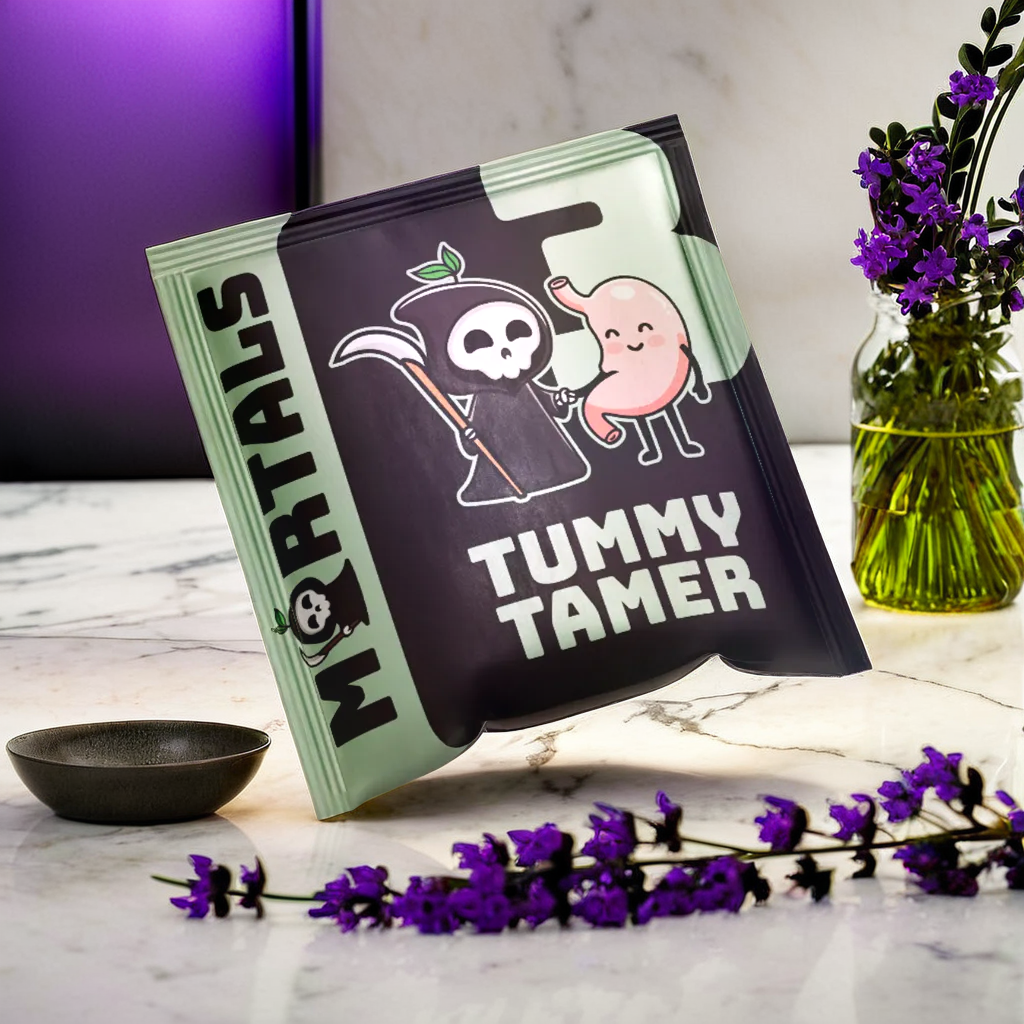
Tummy Tamer includes Bacillus spore-based probiotics (B. clausii, B. coagulans, B. mesentericus, B. subtilis) alongside 8 digestive ingredients — designed for fast-acting gut support in a single, individually sealed sachet that maintains potency until you open it. Note: Tummy Tamer uses spore-based Bacillus probiotics rather than the Lactobacillus, Bifidobacterium, or Saccharomyces strains discussed in this article. Spore-based probiotics offer superior survival through stomach acid (up to 95% vs. as low as 1% for some traditional strains) and excellent shelf stability without refrigeration.
Probiotics vs. Prebiotics vs. Postbiotics
These three terms sound similar but play distinct roles in gut health:
- Prebiotics are types of dietary fiber that feed your existing beneficial gut bacteria. Think of them as fertilizer for the good bacteria already living in your gut. Sources include garlic, onions, leeks, asparagus, bananas, and oats.
- Probiotics are live beneficial bacteria that you introduce to your gut through food or supplements. They provide a direct infusion of beneficial organisms.
- Postbiotics are the bioactive metabolites produced by probiotic bacteria during fermentation — including SCFAs, enzymes, peptides, and organic acids. These compounds deliver many of the health benefits attributed to probiotics.
For optimal gut health, you benefit from all three working together. Prebiotics feed probiotics, probiotics produce postbiotics, and postbiotics support gut health. It is a synergistic cycle.
Diet First, Supplement Smart
No supplement can compensate for a poor diet, and that is especially true for gut health. Your daily food choices have the single biggest impact on your microbiome:
- Fermented foods — yogurt, kimchi, sauerkraut, kefir, miso, and kombucha — naturally contain probiotic organisms. A Stanford study found that a diet high in fermented foods increased microbiome diversity and reduced inflammatory markers more effectively than a high-fiber diet alone.
- High-fiber diet — the foundation of gut health. Fiber feeds beneficial bacteria and promotes SCFA production. Most Americans consume only 15 grams of fiber daily, well below the recommended 25-35 grams.
- Diverse plant foods — aim for 30 different plant foods per week. Variety feeds different bacterial species and promotes a more diverse, resilient microbiome.
Supplements fill gaps — they do not replace a gut-healthy diet. When you need targeted digestive support, Tummy Tamer provides comprehensive digestive support with spore-based Bacillus probiotics and digestive ingredients in a convenient single-serve format.
Frequently Asked Questions
Should everyone take a probiotic?
Not necessarily. Probiotics are most beneficial for specific concerns like antibiotic recovery, IBS management, or recurrent digestive discomfort. For generally healthy individuals, a high-fiber diet rich in fermented foods provides an excellent foundation. Supplements are best used for targeted support when dietary approaches need a boost.
How long does it take for probiotics to work?
Most people notice digestive changes within 1-4 weeks of consistent daily use. However, response time depends on the strain, the dose, and your individual gut composition. Some people respond quickly while others need more time. Consistency is key — probiotics work best with daily use.
Can probiotics cause bloating at first?
Yes — temporary increased gas or bloating is common in the first few days as your gut adjusts to the new bacterial populations. This typically resolves within a week. If symptoms persist or worsen, consider trying a different strain or reducing the dose and gradually increasing it.
What is the best time to take probiotics?
Research is mixed on optimal timing. Some strains survive better when taken with food (the food buffers stomach acid), while others perform well on an empty stomach. The most important factor is consistency — take your probiotic at the same time every day so it becomes a habit.
About the Author
Connor is the founder of Mortals, an all-natural supplement brand committed to clinical doses, transparent ingredients, and single-serve convenience. After years of frustration with underdosed supplements and misleading labels, Connor built Mortals to deliver what the supplement industry has been promising but rarely delivers — products that actually work.
*These statements have not been evaluated by the Food and Drug Administration. This product is not intended to diagnose, treat, cure, or prevent any disease. Always consult your healthcare provider before starting any new supplement regimen.