Bloating and gas are among the most common digestive complaints — and among the most frustrating to manage. If you've tried dietary changes and still find yourself dealing with uncomfortable bloating, you may be considering a probiotic supplement. But with hundreds of options on the market, how do you actually choose one that works?
In this guide, we break down the science of probiotics for bloating and gas — which strains have clinical evidence, how CFU counts matter, what to look for (and avoid), and how to set realistic expectations.
Why Bloating and Gas Happen
- Gut dysbiosis: An imbalance between beneficial and harmful bacteria leads to excess fermentation. Research shows that IBS patients have lower levels of beneficial Bifidobacterium and Lactobacillus compared to healthy individuals.
- Impaired digestion: Incomplete food breakdown provides substrate for bacterial fermentation
- Slow motility: Bacteria have more time to ferment food, producing excess gas
- SIBO: Bacteria in the small intestine cause fermentation where it shouldn't occur
- Food intolerances: Enzyme deficiencies lead to undigested food reaching the colon
- Compromised gut barrier: Triggers immune responses and localized inflammation
How Probiotics Help with Bloating and Gas
A 2023 systematic review analyzing 82 clinical trials with over 10,000 patients found that specific probiotic strains can meaningfully improve IBS symptoms including bloating. Here's how they work:
- Restoring microbial balance: Competing with gas-producing bacteria
- Producing digestive enzymes: Some strains produce lactase, lipase, and other enzymes
- Reducing fermentation: Improving digestion efficiency
- Supporting gut motility: Maintaining healthy transit time
- Strengthening the gut barrier: Supporting tight junction integrity
- Modulating inflammation: Helping maintain healthy inflammatory balance
Best Probiotic Strains for Bloating and Gas
Lactobacillus acidophilus
Produces lactase, supports healthy gut pH, and maintains microbial balance. A double-blind clinical trial found that L. acidophilus NCFM combined with Bifidobacterium lactis Bi-07 significantly improved bloating severity — with a 15% reduction in clinical bloating symptoms after 8 weeks of treatment.
Bifidobacterium lactis
Strong evidence for supporting gut transit time. The same 2011 Ringel-Kulka study demonstrated that patients taking B. lactis Bi-07 showed significant improvement in abdominal bloating severity at both 4 weeks (p = 0.02) and 8 weeks (p < 0.01). B. lactis BB-12 and HN019 are also particularly well-studied.
Lactobacillus plantarum
L. plantarum 299v is one of the most evidence-backed strains for digestive comfort. A 2012 study found it significantly improved bloating and abdominal comfort. This strain is particularly resilient, surviving stomach acid well.
Bifidobacterium longum
Shows particular promise for gas reduction. Research shows B. longum promotes a healthy gut environment, supports GI lining integrity, and defends against pathogenic gut microbes.
Lactobacillus rhamnosus GG
The most extensively studied probiotic strain globally. Supports gut barrier function and immune modulation with an excellent safety profile.
Saccharomyces boulardii
This beneficial yeast is uniquely resistant to antibiotics and stomach acid. A 2015 systematic review found it supported digestive comfort across multiple conditions.
Bacillus coagulans
A 2022 network meta-analysis found that B. coagulans had the highest probability of being the optimal probiotic species for improving IBS symptom relief, including bloating and abdominal pain scores.
CFU Count: How Much Do You Actually Need?
- Minimum effective dose: 1-10 billion CFU daily
- Common effective range: 10-50 billion CFU daily
- High-dose protocols: 50-100+ billion CFU (under medical guidance)
Key nuances: Look for CFU guaranteed through expiration (not just manufacturing). Strain matters more than count. Delivery mechanism affects survival. A 2023 meta-analysis confirmed that multi-strain formulas and higher doses tend to show larger effect sizes for IBS symptoms.
What to Look for in a Probiotic Supplement
Must-Haves
- Specific strain identification (full designation, not just species)
- CFU guarantee through expiration
- Third-party testing
- Proper storage instructions
- No unnecessary fillers
Red Flags
- Proprietary blends without individual strain amounts
- Extremely high CFU counts (200+ billion) without justification
- No strain-level identification
- No third-party testing
Complementary Strategies for Better Results
Digestive Enzymes
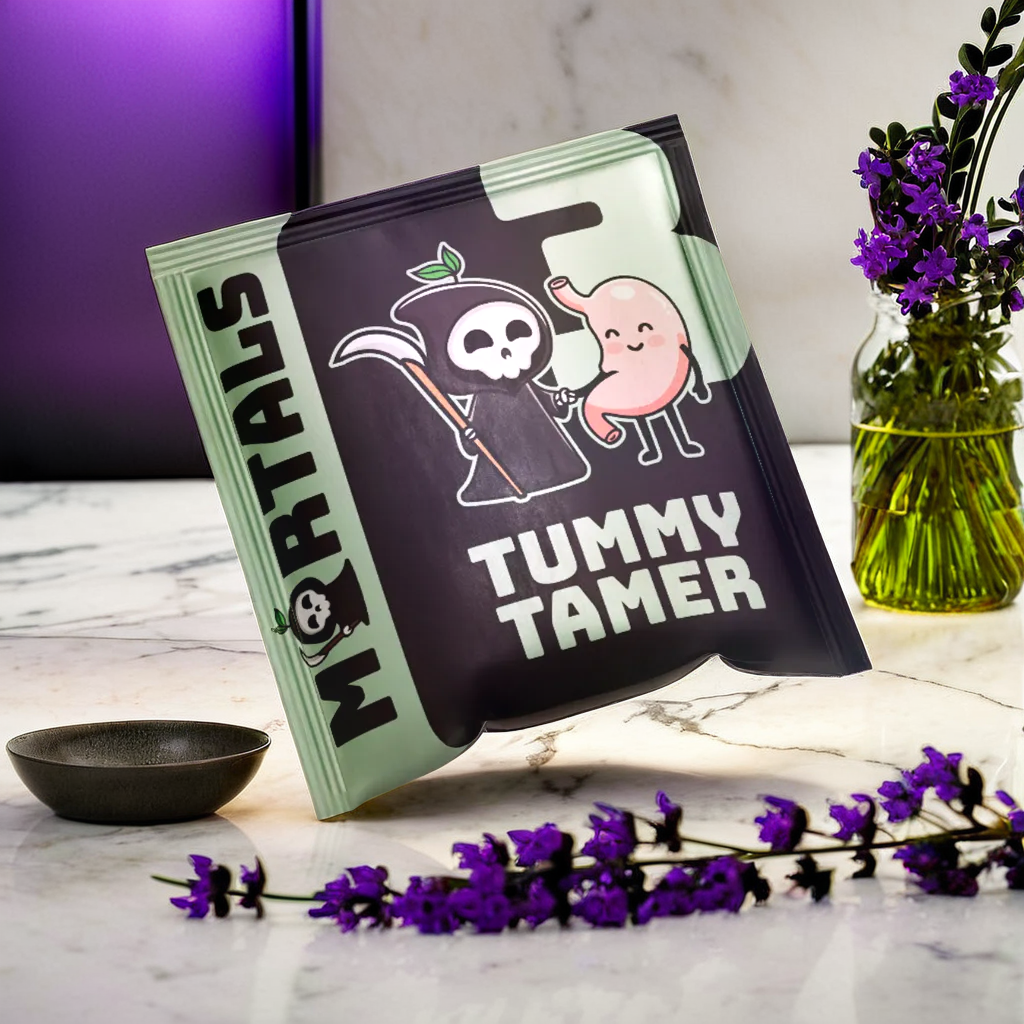
Clinical research shows digestive enzyme supplementation can help break down food more completely, reducing the substrate available for bacterial fermentation. One study found participants experienced 58% less abdominal distension at 30 minutes and 68% less at 90 minutes compared to placebo. Our Tummy Tamer includes bromelain alongside a probiotic blend and 7 other digestive support ingredients.
Prebiotic Fiber
Prebiotics feed beneficial gut bacteria. Good sources: garlic, onions, leeks, asparagus, bananas, chicory root. Start slowly to avoid temporary worsening. Learn more about how probiotics and prebiotics work together for gut health.
Ginger and Artichoke Extract
Research from Wu et al. demonstrates that ginger accelerates gastric emptying and stimulates antral contractions. A follow-up study confirmed these benefits extend to patients with functional dyspepsia, with gastric emptying time reduced from 16.1 to 12.3 minutes. For a deeper dive, read our guide on ginger for digestion. Both ginger and artichoke extract are included in Tummy Tamer.
Other Soothing Options
Peppermint oil is another well-studied option for digestive comfort. A 2022 systematic review of 10 trials (1,030 patients) found peppermint oil was significantly more effective than placebo for global IBS symptoms. Note: Tummy Tamer uses ginger and lemon balm (not peppermint) to achieve similar soothing effects through different mechanisms.
Mindful Eating
Slow down, chew thoroughly (20-30 chews per bite), and eat in a relaxed state. For more natural approaches, see our guide on how to debloat fast.
How Long Until Probiotics Help with Bloating?
- Week 1-2: Initial changes (possibly temporary increase in gas as gut adjusts)
- Week 2-4: Most clinical trials show improvements beginning here
- Week 4-8: More consistent improvements in bloating frequency and severity
- Month 2-3: Full microbiome remodeling effects and stable benefits
Frequently Asked Questions
Can probiotics make bloating worse at first?
Yes, and this is common. Microbial turnover can temporarily increase gas production. This typically resolves within 1-2 weeks. If it persists beyond 2-3 weeks, consider reducing the dose or trying different strains.
Should I take probiotics with food or on an empty stomach?
Most studies suggest taking probiotics with or shortly before a meal improves survival rates. Food buffers stomach acid and provides nutrients for the bacteria.
Can I get enough probiotics from food alone?
Fermented foods provide beneficial bacteria, but strains and quantities are variable and generally lower than clinical trial doses. For targeted support, a supplement with specific strains at therapeutic doses is more reliable.
Do probiotics need to be refrigerated?
It depends on the formulation. Some are shelf-stable, others require refrigeration. Always follow label instructions.
What's the difference between probiotics and digestive enzymes for bloating?
Digestive enzymes help break down food more completely (addressing the cause), while probiotics modify the gut bacterial environment (changing which organisms do the fermenting). Combining both — as in Tummy Tamer — addresses multiple root causes.
The Bottom Line
Choosing the right probiotic for bloating and gas comes down to three things: clinically studied strains, adequate CFU counts with viability guarantees, and consistency. Look for multi-strain formulas featuring Lactobacillus plantarum, Bifidobacterium lactis, Lactobacillus acidophilus, and Bifidobacterium longum — and give them at least 4-8 weeks.
For a comprehensive approach to digestive comfort that combines probiotics with digestive enzymes and gut-soothing botanicals, Tummy Tamer delivers 11 clinically dosed ingredients (7 herbal actives plus 4 probiotic strains) in a convenient single-serve sachet — designed for noticeable support within 15-30 minutes.
References
- Ringel-Kulka T, et al. Probiotic bacteria Lactobacillus acidophilus NCFM and Bifidobacterium lactis Bi-07 versus placebo for the symptoms of bloating in patients with functional bowel disorders: a double-blind study. J Clin Gastroenterol. 2011;45(6):518-25. PMID: 21436726
- Ford AC, et al. Efficacy of Probiotics in Irritable Bowel Syndrome: Systematic Review and Meta-analysis. Am J Gastroenterol. 2023;118(9):1621-1632. PMID: 37541528
- Zhang T, et al. Efficacy of Probiotics for Irritable Bowel Syndrome: A Systematic Review and Network Meta-Analysis. Front Cell Infect Microbiol. 2022;12:859967. PMID: 35433498
- Wu KL, et al. Effects of ginger on gastric emptying and motility in healthy humans. Eur J Gastroenterol Hepatol. 2008;20(5):436-40. PMID: 18403946
- Hu ML, et al. Effect of ginger on gastric motility and symptoms of functional dyspepsia. World J Gastroenterol. 2011;17(1):105-10. PMID: 21218090
- Alammar N, et al. Systematic review and meta-analysis: efficacy of peppermint oil in irritable bowel syndrome. Aliment Pharmacol Ther. 2022;56(5):738-750. PMID: 35942669
- Di Ciaula A, et al. Gut microbiota dysbiosis in functional gastrointestinal disorders. United European Gastroenterol J. 2021;9(8):930-949. PMID: 34505026
- O'Callaghan A, van Sinderen D. Bifidobacteria and Their Role as Members of the Human Gut Microbiota. Front Microbiol. 2016;7:925. PMC4908950
- Ianiro G, et al. Digestive Enzyme Supplementation in Gastrointestinal Diseases. Curr Drug Metab. 2016;17(2):187-93. PMC4923703
- Zhang C, et al. Efficacy of digestive enzyme supplementation in functional dyspepsia. Neurogastroenterol Motil. 2024;36(1):e14694. PMID: 37976892
Written by Connor. Connor is the founder of Mortals, an all-natural supplement brand focused on clinical dosing. After years of frustration with underdosed supplements and misleading labels, he created Mortals to deliver what the research actually supports.
*These statements have not been evaluated by the Food and Drug Administration. This product is not intended to diagnose, treat, cure, or prevent any disease. Always consult your healthcare provider before starting any new supplement regimen.