You have probably heard both recommended for bloating: probiotics and digestive enzymes. They show up in the same supplement aisle, get mentioned in the same blog posts, and sometimes even appear in the same products. But they are fundamentally different — and understanding how each works can help you choose the right approach for your digestive issues.
In this guide, we will compare probiotics vs digestive enzymes head-to-head: what each does, when to use one over the other, and why the most effective approach might involve combining both.
What Are Digestive Enzymes?
Digestive enzymes are proteins your body naturally produces to break down food into absorbable nutrients. Your mouth, stomach, pancreas, and small intestine all produce different enzymes for different types of food.
The Main Types of Digestive Enzymes
- Proteases (including bromelain and papain): Break down proteins into amino acids
- Lipases: Break down fats into fatty acids and glycerol
- Amylases: Break down carbohydrates and starches into simple sugars
- Lactase: Breaks down lactose (milk sugar) — deficiency causes lactose intolerance
- Cellulase: Helps break down plant fiber (humans do not produce this naturally)
How Digestive Enzymes Help Bloating
Bloating often occurs when food is not fully broken down in the stomach and small intestine. Undigested food passes into the large intestine where gut bacteria ferment it, producing gas. This gas causes the distension, pressure, and discomfort we experience as bloating.
Supplemental digestive enzymes help by improving the breakdown of food earlier in the digestive process. When food is properly digested in the stomach and small intestine, less undigested material reaches the colon, which means less fermentation and less gas.
A 2023 clinical trial found that enzyme supplementation significantly improved functional dyspepsia symptoms, with improvements in quality of life and decreased severity of pain. Another randomized, double-blind study of a multienzyme complex showed statistically significant improvements in bloating, fullness, and postprandial distress compared to placebo.
When Digestive Enzymes Work Best
- Meal-related bloating: If your bloating consistently occurs after eating, especially after specific types of food
- Large or rich meals: When your natural enzyme production cannot keep up with the volume or complexity of food
- Age-related enzyme decline: Enzyme production naturally decreases with age, starting around 30
- Specific food intolerances: Like lactose intolerance (lactase deficiency) or difficulty digesting high-protein meals
Onset Time
Digestive enzymes work quickly — typically within 15-30 minutes of ingestion. They begin working as soon as they reach the stomach, actively breaking down food in real time. This makes them ideal for acute, meal-related bloating.
What Are Probiotics?
Probiotics are live microorganisms — primarily bacteria and some yeasts — that provide health benefits when consumed in adequate amounts. They are not breaking down your food directly. Instead, they are supporting the ecosystem of trillions of microorganisms living in your gut (your gut microbiome).
How Probiotics Work
Your gut microbiome plays a central role in digestion, immune function, mood regulation, and more. When this ecosystem is out of balance (a state called dysbiosis), digestive problems including bloating are a common result.
Probiotics help by:
- Restoring microbial balance: Introducing beneficial bacteria that may be depleted
- Competing with harmful bacteria: Crowding out gas-producing pathogenic bacteria
- Supporting the gut barrier: Maintaining the integrity of the intestinal lining
- Producing short-chain fatty acids: Metabolites that nourish colon cells and support healthy digestion
- Modulating gas production: Some strains specifically help reduce gas-producing fermentation patterns
Key Clinical Evidence for Probiotics and Bloating
A 2020 meta-analysis of 35 RCTs involving 3,452 patients found that probiotics significantly improved bloating scores (SMD -0.15, 95% CI -0.27 to -0.03, P = 0.01) and reduced persistence of IBS symptoms. The most studied strains for bloating include:
- Lactobacillus acidophilus: One of the most researched strains for digestive health
- Bifidobacterium lactis: A double-blind clinical trial showed B. lactis Bi-07 significantly improved bloating severity at 4 weeks (P=0.009) and 8 weeks
- Lactobacillus plantarum: Research shows L. plantarum 299v provides effective symptom relief for abdominal pain and bloating in IBS patients
When Probiotics Work Best
- Chronic, daily bloating: If you are bloated regardless of what you eat, a microbiome imbalance may be the root cause
- Post-antibiotic recovery: Antibiotics devastate gut bacteria; probiotics help rebuild
- Irregular bowel patterns: Probiotics support overall digestive regularity
- Stress-related digestive issues: The gut-brain axis means stress affects your microbiome
Onset Time
Probiotics work on a longer timeline — typically 2-4 weeks of consistent daily use before noticeable improvements. They are rebuilding an ecosystem, not providing instant relief. Some people notice changes within a week, but the full benefits build with continued use.
Head-to-Head Comparison
| Factor | Digestive Enzymes | Probiotics |
|---|---|---|
| What they do | Break down food directly | Support gut microbiome balance |
| Onset time | 15-30 minutes | 2-4 weeks |
| Best for | Meal-related bloating | Chronic daily bloating |
| How to take | With or just before meals | Daily, with or without food |
| Mechanism | Chemical breakdown of food | Ecosystem restoration |
| Duration of effect | Per-meal (acute) | Cumulative (ongoing) |
| Works without food? | No (need food to break down) | Yes (colonize regardless) |
Why Combining Both May Be the Best Approach
Here is the insight that most bloating articles miss: digestive enzymes and probiotics are not competing solutions. They work through completely different mechanisms and address different root causes of bloating.
- Enzymes handle the immediate problem: Incomplete food breakdown causing gas
- Probiotics handle the underlying problem: Microbial imbalance causing chronic digestive dysfunction
Think of it this way: enzymes are the fire department (responding to the acute situation), while probiotics are the building inspector (preventing future problems by maintaining structural integrity).
A review in Current Drug Metabolism noted that combined enzyme-probiotic formulations showed promise for comprehensive digestive support, as they address both the acute and chronic aspects of digestive discomfort simultaneously.
Formulas That Combine Both
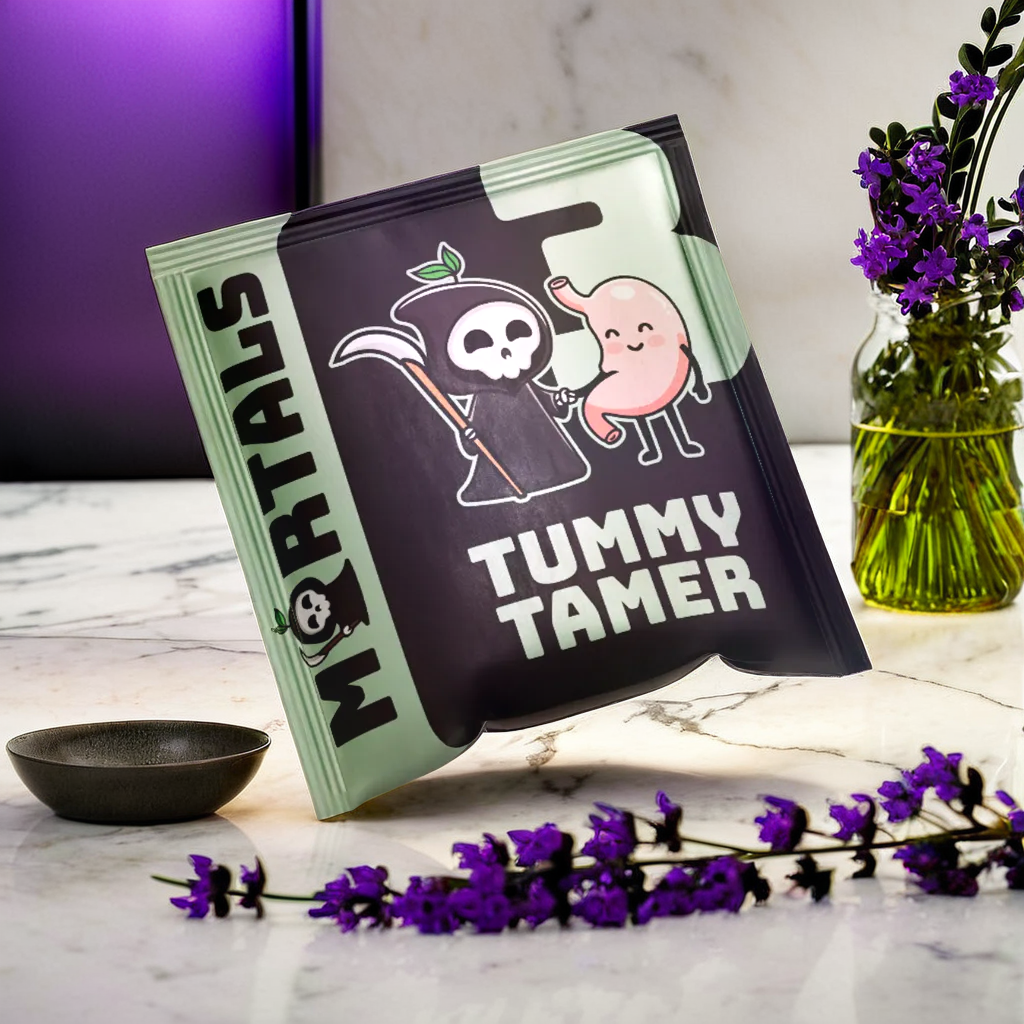
Tummy Tamer by Mortals was formulated with this combined approach in mind. It includes both digestive support ingredients (bromelain, ginger, artichoke extract) and a Bacillus spore-based probiotic blend — all at clinical doses in a convenient single-serve sachet. Note: Tummy Tamer uses spore-based Bacillus probiotics (B. clausii, B. coagulans, B. mesentericus, B. subtilis), which offer superior survival through stomach acid compared to traditional Lactobacillus and Bifidobacterium strains discussed above. The formula covers 6 mechanisms of digestive support: enzymatic breakdown, motility support, bile production, smooth muscle relaxation, microbiome support, and GI soothing.
With 11 clinically dosed ingredients (7 herbal actives plus 4 probiotic strains), Tummy Tamer is designed for both the immediate meal-related bloating (15-30 minute onset from enzymes and ginger) and the long-term microbiome support (probiotics building over consistent use).
How to Choose the Right Approach for You
Start With Enzymes If:
- Your bloating is clearly triggered by meals
- Certain foods consistently cause problems
- You need fast-acting support
- You are over 30 (natural enzyme production declines with age)
Start With Probiotics If:
- Your bloating seems constant, not just meal-related
- You have recently taken antibiotics
- You have irregular bowel patterns
- Your diet has changed significantly or you are under chronic stress
Use Both If:
- You experience both meal-related and chronic bloating
- You want comprehensive digestive support
- You have tried one approach alone without complete resolution
- You want to address both symptoms and root causes simultaneously
Tips for Getting the Most From Either Approach
- Take enzymes with food — they need something to break down. Taking them on an empty stomach wastes their potential.
- Take probiotics consistently — skipping days undermines the colonization process. Daily use for at least 4 weeks gives the best picture of results.
- Stay hydrated — water supports both enzymatic reactions and a healthy gut environment.
- Address dietary triggers — supplements support digestion, but they work best alongside mindful eating habits.
- Give it time — enzymes work quickly, but if you are adding probiotics, give them at least 2-4 weeks before judging effectiveness.
As always, consult your healthcare provider before starting any new supplement regimen, especially if you have existing digestive conditions or take prescription medications.
Frequently Asked Questions
Can I take probiotics and digestive enzymes at the same time?
Yes. Probiotics and digestive enzymes work through completely different mechanisms and are safe to take together. Many clinical-dose formulas combine both for comprehensive digestive support.
Which is better for bloating after meals: probiotics or enzymes?
For immediate, meal-related bloating, digestive enzymes are more effective because they begin working within 15-30 minutes by directly breaking down food. Probiotics support long-term digestive health but do not provide the same acute relief.
How long do probiotics take to help with bloating?
Most research shows 2-4 weeks of consistent daily use before noticeable improvements in bloating. Some people notice changes within a week, but the full benefits build with continued use as beneficial bacteria colonize your gut.
Do digestive enzymes have side effects?
Digestive enzymes are generally well-tolerated. Some people may experience mild GI discomfort when first starting. If you have a pineapple allergy, avoid bromelain. Consult your healthcare provider if you take blood thinners, as some enzymes may interact.
Should I take digestive enzymes every day?
You can take digestive enzymes daily with meals. Unlike probiotics, they do not build up in your system — they work on a per-meal basis. Many people take them with their largest meal or when eating foods that typically cause bloating.
Written by Connor. Connor is the founder of Mortals, an all-natural supplement brand focused on clinical dosing. After years of frustration with underdosed supplements and misleading labels, he created Mortals to deliver what the research actually supports.
*These statements have not been evaluated by the Food and Drug Administration. This product is not intended to diagnose, treat, cure, or prevent any disease. Always consult your healthcare provider before starting any new supplement regimen.